
#JornadasAES
header

PRESENTATION

Data, evidence, decisions: generating value for health management and policy


From 17 to 19 June 2026, the 45th edition of the Health Economics Association (AES) Conference will take place in Seville. The theme chosen for this conference is "Data, evidence, decisions: generating value for health management and policy".

Advances in the use of health data are now a key element in addressing the present and future challenges of our health systems. Transforming data into actionable evidence has become a strategic resource that allows public policies to be guided, management to be optimised and sustainable decisions to be guaranteed based on solid, transparent and verifiable information.

In this context, data is not only a technical tool, but also a lever for legitimacy and public trust. Its correct use helps to reduce uncertainty, reinforce transparency and ensure that resources are allocated where they generate the greatest value in terms of health, equity and social welfare. In short, it is about placing evidence at the centre of decision-making.

The incorporation of information from multiple sources, together with methodological advances in its analysis, is opening up new possibilities for the evaluation of health technologies and the regulation of their use in clinical practice. In this way, data is consolidating its role as a bridge between innovation and management, offering a more robust framework to accompany the introduction of new solutions for the benefit of patients and professionals.

This potential can only be achieved through collaboration between institutions, researchers and decision-makers. A shared commitment to quality, interoperability and good data governance will be crucial in turning evidence into action and moving towards a more robust and efficient healthcare system geared towards the needs of citizens.

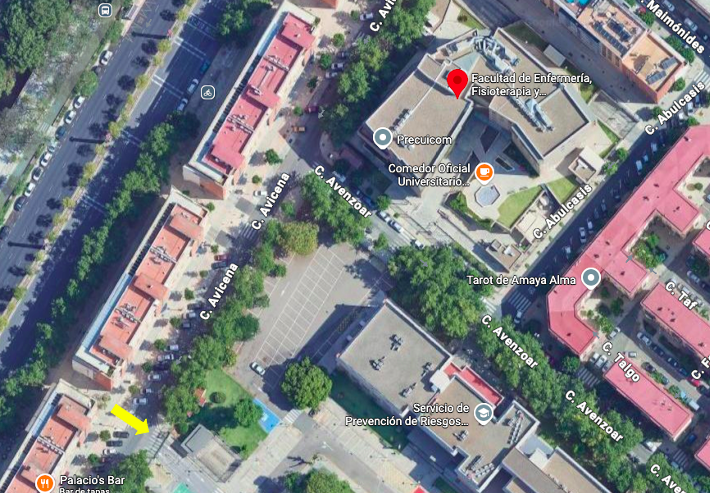
The venue for this conference will be the Faculty of Nursing, Physiotherapy and Podiatry at the University of Seville, located on the Macarena Campus, a 20-minute walk from Alamillo Park, a natural space covering more than 48 hectares, and the historic city centre. The University of Seville stands out for the importance of its institutional headquarters, the Royal Tobacco Factory (now the Rector's Office), which is one of the oldest in Spain and was founded in 1505. It is a key part of the city's economic and social history due to its industrial activity and the role played by the tobacco manufacturers, which were considered a symbol of change and social struggle. The University of Seville incorporates "La Fama" (Fame) into its logo, which expresses its vocation to transmit knowledge and project the prestige of learning: one of the premises that inspires these conferences.

The AES Conference returns to Seville in 2026, 42 years after the 4th AES Conference was held there in 1984 with the theme "Economic aspects of healthcare reform". Its Mediterranean climate invites visitors to stroll and enjoy one of the largest historic centres in Europe, a welcoming city with a friendly transit network and unforgettable traditions. We are confident that Seville will attract talent and that, with the active participation of economists, healthcare professionals, healthcare policy makers, industry and other concerned parties, we will promote the sustainability of the healthcare system and community health through this 45th AES Conference.

We look forward to seeing you in Seville!

Scientific and Organising Committees

COMMITTEE

Organizing Committee

President
Ana Magdalena Vargas Martínez

Members
Juan Antonio Blasco Amaro
Jaime Espín Balbino
Ángel Fernández Pérez
Leticia García Mochón
Antonio Gutiérrez Pizarraya
Sergio Márquez Peláez
Emma Motrico Martínez
Marta Trapero Bertrán

Scientific Committee

President
Francisco Jódar Sánchez

Members
María Luz González Álvarez
Salvador Peiró Moreno
Miquel Serra Burriel
Myriam Soto Ruiz de Gordoa
Alexandrina Stoyanova

Board of Directors

President
Pilar Pinilla Domínguez

Vice-president 1
Néboa Zozaya González

Vice-president 2
Roberto Nuño Solinis

Secretary
Soledad Isern de Val

Treasurer
Marc Carreras Pijuan

Members
Sergio García Vicente
Dolores Jiménez Rubio
Sophie Gorgemans
Jaime Espín Balbino

GENERAL INFORMATION

Venue

Universidad de Sevilla
Facultad de Enfermería, Fisioterapia y Podología
C. Avenzoar, 6,
41009 Sevilla,
Sevilla
Universidad  de Sevilla

Organize

Asociación de Economía de la Salud - AES Universidad de Sevilla - US

KEY DATES

03/02/26

The deadline
for submission of individual abstracts

03/02/26

The deadline
for the submission of organised sessions

20/04/26

The deadline
Price Change

Emulation of Diana Clinical Trials with Observational Data: Fundamentals and Practical Applications

June 16, 2026
Taught by Gonzalo Martínez-Alés and Arce Domingo Relloso

Workshop objective:

The objective of this workshop is to introduce, in a practical way, the principles of target trial emulation for causal inference with observational health data. Over four hours, combining a theoretical part and a practical session in RStudio with examples from real studies, participants will learn how to conceptualize an observational study as the emulation of a clinical trial, define its key components and apply basic analytical strategies to estimate causal effects using real-world health datasets.

Programme

Tuesday, June 16

10.00 - 10.15 hours

Welcome and introduction to the workshop

10.15 - 11.00 hours

Fundamentals of target trial emulation: concept and key components

11.00 - 11.30 hours

Examples applied in health research

11.30 - 12.00 hours
Coffee break
12.00 - 13.00 horas

Step-by-step design of a target trial emulation

13.00 - 14.15 hours
Lunch
14.15 - 15.15 hours

Introduction to the practical session in RStudio and data preparation

15.15 - 16.15 hours

Practical analysis with a real example

16.15 - 16.45 hours

Interpretation of results and methodological discussion

16.45 - 17.00 hours

Final questions and closing

Speakers

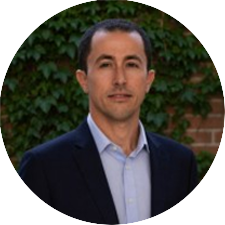
Foto Gonzalo Martínez-Alés

Gonzalo Martínez-Alés

Icahn School of Medicine at Mount Sinai

View CV

Foto Arce Domingo Relloso

Arce Domingo Relloso

IE Universidad

View CV

General information

General data

Date: June 16, 2026
Schedule: 10:00 am to 17:00 pm.
Fee: €30.00 for "registered in the AES Conferences". €100.00 for those "not registered for the AES Conference".
Campus: Colegio de Economistas de Sevilla (Calle José Saramago, nº 1, Edificio Giralda 8, Sevilla)
Language: Spanish

Wednesday, June 17, 2026

08:30 - 09:30 h Accreditation and handover of documentation
09:30 - 10:00 h
Salón de actos - Salón de grados
Opening ceremony
10:00 - 11:00 h
Salón de actos - Salón de grados
Plenary Session
Ethical and sustainable use of real clinical data to generate new medical knowledge
Joaquín Dopazo Blázquez. Barcelonaβeta Brain Research Center (BBRC), Barcelona, Spain
11:00 - 11:30 h

Coffee break
11:30 - 13:00 h
PARALLEL SESSIONS
Classroom 2.1
Bandera indicando idioma inglés
GSK
Invited session I
Evolving Methodologies in Health Technology Assessment

Chair: Jaime Espin. Escuela Andaluza de Salud Pública


Evolving methods for evolving policy: value framework, modifiers, and the next steps in the harmonisation across programmes
Pilar Pinilla Domínguez. Programme Director for Methods, Research and Health Economics. National Institute for Health and Care Excellence (NICE)

Share‑based reward mechanisms for new pharmaceuticals: balancing innovation incentives and lifecycle value sharing
Beth Woods. Centre for Health Economics, University of York

HTA methodology: Key issues for the economic regulation of the pharmaceutical industry in Spain
Pedro Luis Sánchez. Farmaindustria

Classroom 1.5
AESEC
Interest Group session I
AESEC

Chairs: 
Marina Barreda GutiérrezCo-Coordinator, AESEC / University of Cantabria
Ana Ledesma Cuenca. Co-Coordinator, AESEC / University of La Rioja


Hospital Expenditure and Waiting Times in Chile’s Public Health System

Viviana Parra.
Autonomous University of Madrid.


Cost-Benefit of a Cross-Sectoral Care Coordination Intervention (V4M) in Patients with Complex Multimorbidity in Denmark: A Quasi-Experimental Study

Merce Soler.
Biomedical Research Network Center for Epidemiology and Public Health (CIBERESP).


THE IMPACT OF THE 2015 AND 2023 ABORTION LAW REFORMS ON 16- AND 17-YEAR-OLDS: AN EMPIRICAL ANALYSIS OF RATES AND GESTATIONAL WEEKS

Gala Solís Martel.
University of Las Palmas de Gran Canaria.


WORK, CARE AND WELL-BEING IN THE FACE OF SPOUSAL DISABILITY: GENDER DIFFERENCES AMONG SPANISH COUPLES

Lydia Prieto Sepulveda.
Erasmus University of Rotterdam.


Classroom 1.6
Communications Panel I
Cuidados de larga duración y dependencia

Moderadora: Helena Hernández Pizarro.


O-01. Understanding inequalities in the Long-Term Care Gap in Europe

Raquel Andres Martinez; Alexandrina Stoyanova
Departament d'Economia, Universitat de Barcelona


O-02. Desigualdades socioeconómicas y territoriales en el acceso a cuidados de larga duración en Europa

Daniel Coca; David Cantarero-Prieto; Javier Lera
IDIVAL, Universidad de Cantabria.


O-03. Existencia y valoración económica de la panorámica actual del cuidado informal de personas con dependencia en España

Raúl del Pozo Rubio, Marta Ortega Ortega, Pablo Moya Martínez, Isabel Pardo García, Roberto Martínez Lacoba, María Elisa Amo Saus, Fernando Bermejo Patón, Francisco Escribano Sotos
UNIVERSIDAD DE CASTILLA-LA MANCHA, UNIVERSIDAD COMPLUTENSE DE MADRID


O-04. El uso de servicios para la dependencia en municipios de Castilla-La Mancha: un análisis espaciotemporal

Roberto Martínez Lacoba, Isabel Pardo García, Francisco Escribano Sotos, Pablo Moya Martínez, Raúl del Pozo Rubio, María Elisa Amo Saus, Luis Huélamo Castellanos, Fernando Bermejo Patón
UNIVERSIDAD DE CASTILLA-LA MANCHA


O-05. Valoración del tiempo dedicado al cuidado informal en personas con cáncer

Luz María Peña Longobardo; Cristina Vilaplana; Juan Oliva Moreno; Isaac Aranda Reneo
Universidad de Castilla-La Mancha; Universidad de Murcia


Classroom 1.4
Bandera indicando idioma inglés
Communications Panel II
Economic conditions, workforce challenges, and innovation

Moderadora: Karla Hernandez-Villafuerte.


O-06. VARIATION IN HOSPITAL LENGTH OF STAY AMONG PATIENTS WITH SEPSIS: A RELATIVE COMPARATIVE ASSESSMENT OF THE GERMAN AND SPANISH HEALTH CARE SYSTEMS

Camila Larrazabal Melgar; Micaela Comendeiro-Maaløe; Andreu Sansó Rosselló
Departamento de Economía Aplicada Universidad de les Illes Balears, Instituto de Investigación Sanitaria Islas Baleares


O-07. EARLY-STAGE ECONOMIC EVALUATION OF AI IN HEALTHCARE: MONETIZING BENEFITS IN A PORTUGUESE TECHNOLOGY CONSORTIUM

Almeida A (1), Dias J (3), Melo P (2), Raposo V (2)
(1) 1 MSc student – Economics, Faculty of Economics, University of Coimbra; (2) Centre for Business and Economics Research (CeBER), Faculty of Economics, University of Coimbra; (3) INESC – Coimbra


O-08. HEALTH WORKFORCE NEEDS UNDER POPULATION AGEING: PORTUGAL’s MULTI-REGIONAL EVIDENCE FOR POLICY AND MANAGEMENT

Vítor Raposo (1); João Pedro Ferreira (2); Luís Lopes (1); Luís Cruz (1)
(1) Centre for Business and Economics Research (CeBER), Faculty of Economics, University of Coimbra; (2) University of Virginia, Weldon Cooper Center for Public Service


13:00 - 15:00 h

Lunch
13:00 - 14:00 h
PARALLEL SESSIONS
Classroom 110
Short communications session I
Gestión de instituciones sanitarias I

Chair: Mª Dolores Cano García.


OC-01. Priorización de las inversiones en los centros de atención primaria de Cataluña.

Laura Vila, Claudia Armengol, Beatriu Gimeno, Albert Medina, Martí Ballart, Maria Reventós, Antonieta Torres
Gerencia Inversiones y Patrimonio y Area Economica y de Inversiones


OC-02. Impacto de la inversión en la obsolescencia tecnológica e infraestructuras del SISCAT (2019-2024)

Anna Román; Marc Miró
Agència de Qualitat i Avaluació Sanitàries de Catalunya


OC-03. Análisis multidimensional del desempeño de los servicios clínicos

Francesc López; Francesc Cots, Arlet Puigferrat; Cristina Siles; Arnau Pons
Hospital del Mar (Barcelona)


OC-04. THE SIGNIFICANCE OF PUBLIC-PRIVATE PARTNERSHIP IN THE HEALTHCARE SECTOR

Asadullah Zahir; Dr. Taruna; Dr. Ramesh Kumar Chaturvedi
Department of Management Studies, Babasaheb Bhimrao Ambedkar University (A Central University), Lucknow, India


Classroom 111
Short communications session II
Evaluación de tecnologías sanitarias I

Chair: Nuria García-Agua Soler.


OC-05. ANÁLISIS COSTE-EFECTIVIDAD DE NIRSEVIMAB PARA LA PREVENCIÓN DE HOSPITALIZACIÓN POR VRS EN UN HOSPITAL REGIONAL DE CÓRDOBA (ANDALUCÍA)

Antonio J García Ruiz; Salvador Diaz Romero
Universidad de Málaga; FEA Medicina Preventiva y Salud Pública HU Juan Ramón Jimenez


OC-06. Evaluación económica preliminar del proyecto ADMIT: intervención de atención domiciliaria integrada salud-social

Roger Sabater-Mezquita; Lorena Villa; Glòria Merino-Pinto; Guillem López-Casasnovas; Carola Orego; Cristina Salrach; Maria Verónica Guillot; Rosario Jiménez; Miriam Aballí; Sílvia Ramírez; Susagna Serrano-Pagès; Josep Lluís Nicolau-Pascual; Elisabet Demonjó-Duran; Josep Maria Villegas-Subirana; Marco Inzitari
Centro de Investigación en Economía y Salud (CRES-UPF) y Universidad de Barcelona (UB); Investigación sobre Envejecimiento, Fragilidad y Transiciones en Barcelona (REFiT-BCN), Parque Sanitario Pere Virgili (PSPV), Institut de Recerca Vall d’Hebron (VHIR), Departamento de Enfermería de Salud Pública, Salud Mental y Salud Maternoinfantil, Facultad de Enfermería, Universidad de Barcelona (UB); Centro de Investigación en Economía y Salud (CRES-UPF); Centro de Investigación en Economía y Salud (CRES-UPF); Instituto de Investigación Avedis Donabedian - Universidad Autónoma de Barcelona (FAD) y Red de Investigación en Cronicidad, Atención Primaria y Promoción de la Salud (RICAPPS); Instituto de Investigación Avedis Donabedian - Universidad Autónoma de Barcelona (FAD) y Red de Investigación en Cronicidad, Atención Primaria y Promoción de la Salud (RICAPPS); EAP Sarrià; EAP Vallcarca - St Gervasi; CAP Larrard; Instituto Municipal de Servicios Sociales del Ayuntamiento de Barcelona (IMSS); Fundación Hospital de Olot y Comarcal de la Garrotxa (FHOCG); ICS Girona (EAP Olot y EAP Besalú); Consorcio de Acción Social de la Garrotxa (CASG); Programa de Gestión de la Atención Compleja (PGAC) y Consorcio de Osona de Servicios Sociales (COSS); Parque Sanitario Pere Virgili (PSPV)


OC-07. Evaluación económica del cribado para la enfermedad de Wilson en población infantil

Irina Podversich Marino; Luis García Villareal; Francisco Jódar Sánchez; Antonio Tugores; Nuria García-Agua Soler; María Luz González Álvarez; Antonio García Ruiz.
Cátedra Economía de la Salud y Uso Racional del Medicamento UMA - Johnson&Johnson (Universidad de Málaga). Servicio Digestivo - Complejo Hospitalario Universitario Insular Materno Infantil, Las Palmas de Gran Canaria. Departamento de Economía Aplicada (Estadística y Econometría). Universidad de Málaga. Unidad Investigación - Complejo Hospitalario Universitario Insular Materno Infantil, Las Palmas de Gran Canaria. Departamento de Farmacología y Pediatría. (Universidad de Málaga)


OC-08. Análisis de coste-efectividad de la cirugía frente a la toxina botulínica en el tratamiento de la espasticidad del miembro superior en pacientes con ictus

Patricia Hurtado-Olmo; Pedro Hernández-Cortés; Ángela González-Santos; Mario Rivera-Izquierdo; Laura Del Olmo-Iruela; Zuzana Špacírová
Cirugía Ortopédica y Traumatología. Hospital Universitario Clínico San Cecilio. Granada; Departamento de Cirugía y sus especialidades (Facultad de Medicina). Universidad de Granada; Deparmento de Fisioterapia (Facultad de Ciencias de la Salud). Universidad de Granada; Departamento de Medicina Preventiva y Salud Pública, Universidad de Granada; Departamente de Medicina Física y Rehabilitación, Hospital Universitario Clínico San Cecilio. Granada; Theorema4H


Classroom 112
Short communications session III
Desigualdades y equidad

Chair: Javier Lera Torres.


OC-09. Calidad democrática y salud autopercibida en la población LGBTIQ+ europea en el periodo post-COVID

María del Puerto López del Amo González, José Jesús Martín Martín, Manuel Correa Gómez, Carmen Fernández Aguilar; Demetrio Carmona Derqui
Universidad de Granada


OC-10. Estigma estructural y salud autopercibida en la población LGBTIQ+ en Europa: un análisis multinivel

Carmen Fernández Aguilar, Demetrio Carmona Derqui, Manuel Correa Gómez, María del Puerto López del Amo, José Jesús Martín Martín
Universidad de Granada


OC-11. VARIABILIDAD INTERTERRITORIAL DE LAS TARIFAS SANITARIAS OFICIALES EN ESPAÑA

Ana Durán; María Merino; Almudena González Domínguez; Alexandra Ivanova
Theorema4H


OC-12. Tarifas sociosanitarias para personas mayores en España: un análisis por regiones

María Merino; Ana Durán; Almudena González Domínguez; Alexandra Ivanova
Theorema4H


14:00 - 15:00 h
PARALLEL SESSIONS
Classroom 110
Short communications session IV
Gestión de instituciones sanitarias II

Chair: David Sánchez Pardo.


OC-13. Diseño y elaboración de los presupuestos anuales de los equipos de atención primaria (EAP) en el ámbito de la prescripción de recetas médicas

Jordi Montserrat; Marta Oliva; Marta Pastor; Albert Medina
Servi Català de la Salut


OC-14. ESTANCIAS PROLONGADAS EVITABLES EN PEDIATRÍA: IMPACTO DEL RIESGO SOCIAL EN LOS COSTOS HOSPITALARIOS EN UN CENTRO DE ALTA COMPLEJIDAD DE PARAGUAY

Héctor Castro; Rubén Gaete; Valeria López; Lourdes Vera; Mario Román
Hospital General Pediátrico Niños de Acosta Ñu - Ministerio de Salud Pública y Bienestar Social - Paraguay


OC-15. Desigualdades en el acceso a equipos de alta tecnología médica en España: comparación entre sanidad pública y privada

Gabriel Ramírez Fleitas, Miguel Ángel Negrín Hernández
Departamento de Métodos Cuantitativos en Economía y Gestión - ULPGC


OC-16. Desarrollo e implantación de un Cuadro de Mando para la gestión y monitorización del cumplimiento del Capítulo I

Diego Sánchez Huelva; Ángel Moreno Rodríguez; José Antonio Rivas González; Enrique Moreno Roldán; Sandra Leal González
Hospital Universitario Virgen del Rocío


OC-17. Mejora del proceso de cuidados paliativos: impacto en la codificación del CMBD de Atención Intermedia

Laura González; Yolanda Varas; Pau Durán
Dirección de Gestión y Ciudadanía; Dirección de Enfermería, Dirección Tecnologías de la Información.


Classroom 111
Short communications session V
Evaluación de tecnologías sanitarias II

Chair: Leticia García Mochón.


OC-18. ANÁLISIS DE COSTE-EFECTIVIDAD BASADO EN EL VALOR DE ESTRATEGIAS ANTI-VEGF PARA LA DEGENERACIÓN MACULAR ASOCIADA A LA EDAD NEOVASCULAR: IMPACTO DEL FRACCIONAMIENTO DE VIALES Y JERINGAS SIN ESPACIO MUERTO

Saturnino Manuel Gismero Moreno ; Antonio J García Ruiz; Francisco Jódar Sánchez
Hospital Universitario Costa del Sol; Cátedra Economía de la Salud y Uso Racional del Medicamento. Departamento de Economía Aplicada (Estadística y Econometría) (Universidad de Málaga). Departamento de Farmacología y Pediatría (Universidad de Málaga)


OC-19. ANÁLISIS COSTE-EFECTIVIDAD DE INCLUIR EL GENOTIPADO PARCIAL DE VPH EN EL CRIBADO DE CÁNCER DE CÉRVIX EN ESPAÑA

Laura Raquel Lema Luzolo; Antonio Gutiérrez Pizarraya; María Luz González Álvarez; Francisco Jódar Sánchez; Juan Antonio Blasco Amaro; Antonio García Ruiz.
Cátedra Economía de la Salud y Uso Racional del Medicamento. Hospital Universitario Nuestra Señora de Valme. Agencia de Evaluación de Tecnologías Sanitarias de Andalucía (AETSA). Departamento de Economía Aplicada (Estadística y Econometría) (Universidad de Málaga). Departamento de Farmacología y Pediatría (Universidad de Málaga)


OC-20. ANÁLISIS DE COSTE-EFECTIVIDAD DEL TRATAMIENTO DE LA OBESIDAD CON SEMAGLUTIDA EN COMBINACIÓN CON DIETA Y EJERCICIO EN ESPAÑA

Andreu Altés (1), Óscar Moreno-Pérez (2,3), Miriam Sandín (4), Josep Vidal (5,6,7), Miquel Sastre-Belío (8), Ferran Pérez-Alcántara (8), Sara Larsen (9), Alberto Martín-Lorenzo (10)
1- Médico de Familia. Centro de Atención Primaria de Sants, Barcelona, España; 2- Departamento de Endocrinología y Nutrición. Hospital General Universitario Dr. Balmis de Alicante. Instituto de Investigación Sanitaria y Biomédica de Alicante (ISABIAL). Alicante, Alicante, España; 3-Departamento de Medicina Clínica. Universidad Miguel Hernández. Elche, Alicante, España; 4- Servicio de Cardiología. Hospital General Universitario Dr. Balmis de Alicante. Instituto de Investigación Sanitaria y Biomédica de Alicante (ISABIAL). Alicante, Alicante, España; 5- Institut d'Investigacions Biomèdiques August Pi Sunyer (IDIBAPS), Barcelona, España; 6- Centro de Investigación Biomédica en Red de Diabetes y Enfermedades Metabólicas Asociadas (CIBERDEM), Barcelona, España; 7- Departamento de Endocrinología y Nutrición, Hospital Clínic, Barcelona, España; 8- Market Access & Healthcare Consulting, Cencora PharmaLex, Barcelona, España; 9- Novo Nordisk A/S, Copenague, Dinamarca; 10- Departmento de Market Access & Public Affairs, Novo Nordisk, Madrid, España


Classroom 112
Short communications session VI
Demanda y utilización de servicios sanitarios I

Chair: Isabel Pardo García.


OC-21. Financiación hipotecaria y salud mental: Análisis Econométrico Espacial entre las Comunidades Autónomas de España

Marina Barreda Gutierrez; Javier Lera Torres; David Cantarero Prieto
Universidad de Cantabria


OC-22. KEY FACTORS OF PREVENTIVE HEALTHCARE USE AMONG OLDER ADULTS

Luis Huélamo Castellanos; Pablo Moya Martínez; Fernando Bermejo Patón; María Elisa Amo Saus; Raúl del Pozo Rubio; Roberto Martínez Lacoba; Isabel Pardo García; Francisco Escribano Sotos
Universidad de Castilla la Mancha


OC-23. Patrones de utilización de servicios sanitarios públicos en población con cáncer comparada con la población general: evidencia a partir de ENSE 2006–2017 y ESdE 2023

Gabriel Ramírez Fleitas, Miguel Ángel Negrín Hernández
ULPGC


OC-24. Herramientas de priorización para las listas de espera de cirugía de cataratas, reemplazo de rodilla y reparación de hernia inguinal, y su efectividad en la reducción de los tiempos de espera de cirugía electiva: una revisión sistemática rápida

Wendy Nieto-Gutierrez; Melixa Medina-Aedo ; Analía Abt-Sack ; M Soledad Isern de Val
Programa de Doctorado en Metodología de la Investigación Biomédica y Salud Pública, Universitat Autònoma de Barcelona, España.. Instituto Aragonés de Ciencias de la Salud, Zaragoza, España.


15:00 - 16:30 h
PARALLEL SESSIONS
Classroom 2.1

Bandera indicando idioma inglés
Invited session II
Health Impacts of Climate Change: Evidence to Inform Decision-Making

Chair: Alexandrina Stoyanova. Faculty of Economics. Universitat de Barcelona

Heat and Health: Disentangling Vulnerability Factors
Hicham Achebak. Institute of Social and Preventive Medicine, University of Bern

Heat & Health: How effective are currently implemented adaptation measures?
Veronika Huber. Doñana Biological Station. Spanish National Research Council

From Climate Impact Modelling to Public Policy: Health and Decision-Making
David García-León. Ministry of Agriculture, Fisheries, and Food

Classroom 1.5
GestionAES
Interest Group session II
GestionAES

Chairs: 
David Cantarero PrietoCo-Coordinator, GestionAES / University of Cantabria
Francesc Cots Reguant. Co-Coordinator, GestionAES / Hospital del Mar, Barcelona


COST PER PATIENT FOR LIVER TRANSPLANTATION AND FACTORS AFFECTING IT

Iker Ustarroz Aguirre.
OSI Ezkerraldea Enkarterri Cruces


APPLICATION OF A MODEL OF EFFICIENCY IN HOSPITAL MANAGEMENT UNITS FOR EVALUATION

José María Mateos Gautier.
Jerez University Hospital


Comparison of Purchase Rates and Real Costs of Hospital Activity in the Hospital of Palamós. Pre-Post Pandemic Evolution

Jose M. Inoriza.
Palamós Hospital Foundation - Integrated Health Services of Baix Empordà (FHP_SSIBE)


Classroom 111
Communications Panel III
Demanda y utilización de servicios

Chair: Laia Maynou Pujolras.


O-09. Does ethnic discrimination in the workplace hinder quality of health care services?

Victoria Serra-Sastre; Catia Nicodemo
City St George's, University of London; Brunel University


O-10. SOLEDAD Y SOBREUTILIZACIÓN DE RECURSOS SANITARIOS: EVIDENCIA BASADA EN EUROPA

Sabela Siaba
Universidade da Coruña


O-11. THE EFFECTS OF SUPERVENING SOCIAL ISOLATION AND LONELINESS ON HEALTHCARE USE

Albert Dalmau-Bueno; Helena M Hernandez-Pizarro; Anna García-Altés
BCN Checkpoint; CRES, UPF; Tecnocampus, UPF; Servei Català de la Salut; CIBER en Epidemiología y Salud Pública (CIBERESP); Institut d’Investigació Biomèdica (IIB Sant Pau)


O-12. Who Benefits from Public vs. Private Hospital Care? Patient-Level Heterogeneity in Surgical Outcomes

Gallego-Moll, C.1,2, Maynou, L.1,3, Phil Mawson4, Martin Kelly5, J Stuart Elborn6, Adam T Hill7, Timothy Gatheral8, Anita Sullivan9, Charles Haworth10, John R Hurst11, Jeremy S Brown11, Mary Carroll12, Michael R Loebinger13, Judy Bradley6, Paul P Walker14, John Steer15, Jamie Duckers16, James D Chalmers17, Richard McNally4, Anthony De Soyza4, McGuire, A.3
1Department of Econometrics, Statistics and Applied Economics, Universitat de Barcelona, Avinguda Diagonal 690, 08034, Barcelona, Spain. 2 Institute for Advanced Research in Business and Economics (INARBE), Public University of Navarre (UPNA), Pamplona, Spain 3 Department of Health Policy, London School of Economics and Political Science, Houghton St, London WC2A 2AE, United Kingdom. 4 Newcastle University- Newcastle upon Tyne, United Kingdom. 5 Western Health and Social Care Trust, Altnaglevin Hospital – Derry, United Kingdom. 6 Queens University of Belfast – Belfast, United Kingdom. 7 The University of Edinburgh Centre for Inflammation Research – Edinburgh, United Kingdom. 8 University Hospitals of Morecambe Bay NHS Foundation Trust - Morecambe Bay, United Kingdom. 9 University Hospitals Birmingham NHS Foundation Trust – Birmingham, United Kingdom. 10 Papworth Hospital- Cambridge, United Kingdom. 11 UCL Respiratory, University College London – London, United Kingdom. 12 University of Southampton and University Hospital Southampton NHS Foundation Trust- Southampton, United Kingdom. 13 Royal Brompton Hospital- London; National Heart and Lung Institute, Imperial College-London, United Kingdom. 14 University of Liverpool- Liverpool, United Kingdom. 15 Northumbria Healthcare NHS Foundation Trust- Tyne and Wear, United Kingdom. 16 University Hospital Llandough- Cardiff, United Kingdom. 17 University of Dundee- Dundee, United Kingdom.


O-13. Absentismo laboral por problemas de salud y utilización de servicios sanitarios en España: impacto de las dificultades de acceso por elevada lista de espera

Alejandro Rodriguez-Caro; Jaime Pinilla
Universidad de Las Palmas de Gran Canaria


Classroom 112
Communications Panel IV
Evaluation, cost and prevalence

O-14. Recent evolution of the health costs associated to lung cancer in Spain

Manuel García Goñi, Imma Puig, Joan Sánchez
Universidad Complutense de Madrid, Hospital Clinic Barcelona, Hospital Clinic Barcelona


O-15. ECONOMIC AND ORGANIZATIONAL IMPACT OF ORAL VERSUS IV AND SC ADMINISTRATION OF HYPOMETHYLATING AGENTS IN PATIENTS WITH AML NOT ELIGIBLE FOR INTENSIVE CHEMOTHERAPY IN SPAIN

María Lloret Avellá1; Mafalda Carmo1; Núria Paladio Duran2
1. IQVIA, Barcelona, Spain; 2. Otsuka, Barcelona, Spain


O-16. Impacto clínico y económico de la vacunación antigripal en Catalunya: análisis poblacional 2024 2025

David Frigola; Narcís Coll; Jaume Heredia
Regió Sanitària de Girona


O-17. COST EFFECTIVENESS ANALYSIS FOR SPIOMET IN ADOLESCENTS AND YOUNG WOMENS WITH POLYCYSTIC OVARY SYNDROME

Manuel García Goñi
Universidad Complutense de Madrid


16:30 - 16:45 h
Coffee break
16:45 - 18:15 h
PARALLEL SESSIONS
Classroom 109
Bandera indicando idioma inglés
Communications Panel V
Variability in medical practice

Chair: Aníbal García Sempere.


O-18. When Diagnostic Thresholds Matter: Evidence on Treatment Allocation and Hospital Resource Use in Iron Deficiency

Beatriz Rodríguez-Sánchez; Micah Prochaska; David Meltzer; David Kim
Universidad Complutense de Madrid; Universidad de Chicago


O-19. TIEMPO, PRIORIZACIÓN Y EQUIDAD: EVALUACIÓN DEL PROGRAMA DE ADECUACIÓN DE LAS LISTAS DE ESPERA QUIRÚRGICAS EN CATALUÑA

Marta Oliva, Jordi Montserrat, David Frigola, Maria Reventós, Albert Medina
Servei Català de la Salut


O-20. Aplicativo Atlas para el seguimiento de la variabilidad en la inclusión quirúrgica en listas de espera

Jordi Montserrat; Marta Oliva; Albert Medina
Servi Català de la Salut


O-21. Modelización ARIMA/SARIMA para la variabilidad territorial y la planificación quirúrgica: evidencia aplicada al Programa de Adecuación de la Indicación Quirúrgica 2025 (SISCAT)

Narcís Coll; David Frigola; Jaume Heredia
Regió Sanitària de Girona


Classroom 1.5
PolicyAES
Interest Group session III
PolicyAES Roundtable: “The Healthcare System: Reality and Perceptions. How Are Demands and Preferences Regarding Healthcare Formed?”

Chairs: 
Anna García-Altés. Co-Coordinator, PolicyAES / Catalan Health Service
Ricard Meneu. Co-Coordinator, PolicyAES / Foundation for Health Research (Valencia)


Health-related myths that are passed off as shared knowledge or evidence
Beatriz González López-Varcárcel. University of Las Palmas de Gran Canaria


A perspective from political science on the creation of false ideas through rumors, disinformation and unfounded expectations
Íria Caamiña. Catalan Agency for Health Quality and Assessment (AQuAS)


When messages weigh more than facts: disinformation, behavior and expectations about healthcare
José María Abellán Perpiñán. University of Murcia


Classroom 1.6
Organised Session I
Disease Modifying Treatment (DMT) en Enfermedades Raras: Un enfoque integral para un concepto emergente en debate.

Moderadoras:
María Errea Rodríguez. Independent Researcher
M. Belén Ferro Rey. NEXTEP IN HEALTH


Regulatory Analysis of Disease-Modifying Treatments for Rare Diseases

María José Pino-Barrio.
Spanish Agency for Medicines and Health Products (AEMPS).


Clinical Analysis of Disease-Modifying Treatments for Rare Diseases

Francesc Palau.
Sant Joan de Déu Children's Hospital. Sant Joan de Déu Research Institute (CSIC).


Evidence Generation Analysis for Disease-Modifying Treatments in Rare Diseases

Marta del Álamo.
European Clinical Research Infrastructure Network (ECRIN), France.


Economic Analysis of Disease-Modifying Treatments for Rare Diseases

Mikel Berdud.
Office of Health Economics (OHE), London.

Classroom 112
Communications Panel VI
Salud mental

Chair: Jaime Pinilla Domínguez.


O-22. Paternity Leave and Maternal Mental Health

Marta Curull-Sentís; Lídia Farré; Laia Maynou
Universitat de Barcelona; IAE-CSIC, IZA; LSE Health, London School of Economics and Political Science; CRES, Universitat Pompeu Fabra


O-23. Does daddy heal mommy? Paternity leave and maternal postpartum health

CAMILA REGUEIRO ONS; BEATRIZ GONZÁLEZ LÓPEZ-VALCÁRCEL; JAIME PINILLA
UNIVERSIDAD DE LAS PALMAS DE GRAN CANARIA


O-24. CHILDREN'S GENETIC RISK FOR ADHD AND EARLY PARENTAL DIVORCE

Alessio Gaggero; Joan Gil; Dolores Jiménez-Rubio
Universidad de Granada; Universitat de Barcelona


O-25. ESTRÉS LABORAL Y EMPLEO A TIEMPO PARCIAL: EFECTOS SOBRE LA SALUD EN TRABAJADORES MAYORES

Sabela Siaba; Berta Rivera; Luis Currais
Universidade da Coruña


O-26. THE SUBJECTIVE WELL BEING PARADOX IN OLDER ADULTS: THE ROLE OF MENTAL HEALTH

Luis Huélamo Castellanos; Pablo Moya Martínez; Fernando Bermejo Patón; María Elisa Amo Saus; Raúl del Pozo Rubio; Roberto Martínez Lacoba; Isabel Pardo García; Francisco Escribano Sotos
Universidad de Castilla la Mancha


Thursday, June 18, 2026

09:00 - 10:30 h
PARALLEL SESSIONS
Classroom 2.1
Invited session III
Data- and evidence-based decision-making

Chair: Miquel Serra Burriel. Universität Zürich

From Clinical Practice to Regulatory Decision-Making: The Value of Real-World Data
Aníbal García Sempere. Foundation for the Promotion of Health and Biomedical Research in the Valencian Community (FISABIO)

Atlas VPM: Data Science for Enhancing System Intelligence
Enrique Bernal Delgado. Aragonese Institute of Health Sciences (IACS)

Common Data Models and Federated Analysis in Health Economics: The Wonderful, the Challenging, and What We Can Expect
Rafael Pinedo Villanueva. University of Oxford

Classroom 1.5
EEconAES
Interest Group session IV
EEconAES

Chair: 
David Epstein. Co-Coordinator, EEconAES / University of Granada
Zuzana Spacirova. Co-Coordinator, EEconAES / Theorema4H


Economic and clinical evaluation of precision medicine in autism spectrum disorder: A systematic review

Paula Pereira Bouzas.
Weber Economics and Health.


Cost-effectiveness analysis of the ATODOM programme: A primary care home-based care model incorporating an occupational therapist for patients with chronic conditions and/or complex needs

Aida Veras García.
Pere Virgili Health Centre


Analysis of the impact of the transition to salbutamol in pressurized inhaler with low global warming potential propellant (HFA-152a) in Spain

Ana Hernández Garma.
GlaxoSmithKline (GSK).


Classroom 111
Bandera indicando idioma inglés
Communications Panel VII
Climate change and health

Chair: Raquel Andrés Martínez.


O-27. Too Hot to Cope? The Role of Long-Term Care Against Heatwave Health Risks

Helena M Hernández-Pizarro; Albert Prades-Colomé
CRES-UPF & Tecnocampus-UPF; CRES-UPF, Departament de Drets Socials de la Generalitat de Catalunya & Tecnocampus-UPF


O-28. Gender differences in the impact of extreme temperatures among the population with long-term care needs

Albert Prades-Colomé; Helena M. Hernández-Pizarro
CRES-UPF, Departament de Drets Socials de la Generalitat de Catalunya & Tecnocampus-UPF; CRES-UPF & Tecnocampus-UPF


O-29. ASSESSING THE ECONOMIC BURDEN OF TEMPERATURE-RELATED EXCESS MORTALITY (2020-2023) IN FIVE EUROPEAN CITIES WITH HETEROGENEOUS CLIMATIC CONTEXTS, AND THE ADDITIONAL IMPACT OF HIGH PARTICULATE POLLUTION DAYS

Roger Sabater Mezquita1,3; Laia Maynou Pujolràs1,3,4; Alexandrina Stoyanova1,3; Marc Sáez Zafra2,3,4
1: Universitat de Barcelona; 2: Grup de Recerca en Estadística, Econometria i Salut (GRECS), Universitat de Girona; 3: Centre de Recerca en Economia i Salut (CRES), Universitat Pompeu Fabra; 4: CIBER de Epidemiología y Salud Pública (CIBERESP), Madrid


O-30. Methods for the Economic Evaluation of Health Impacts of Climate Action. A Scoping Review

Caitlin MacClancy; Paul Oyalo; Patricia Cubi-Molla; Hannah Hussain; Mireia Jofre-Bonet; Andrew Briggs; Francis Ruiz; Sarah Whitmee; Shouro Dasgupta; Jane Falconer; John Cairns; Marcus Keogh-Brown
Global Health Economics Centre, LSHTM, London, UK; OHE, London, UK; ; Centre on Climate Change and Planetary Health, LSHTM, London, UK; RFF-CMCC European Institute of Environmental Economics, Venice, Italy; Library, Archive & Open Research Services, LSHTM, London, UK


Classroom 112
Communications Panel VIII
Gestión de Instituciones Sanitarias I

Chair: Carmen Zambrano.


O-31. Análisis multinivel de la eficiencia técnica de los servicios de traumatología en los hospitales de gestión directa del SNS español por tipo de gestión

Sophie Gorgemans; Olga Urbina Pérez
Universidad de Zaragoza


O-32. Impacto de un ciberataque en las listas de espera hospitalarias: evidencia a partir de datos del CatSalut en un hospital público de alta complejidad de Barcelona

Jaime Pinilla Domínguez
Universidad de Las Palmas de Gran Canaria


O-33. Evaluación del modelo sanitario catalán: análisis longitudinal de la gobernanza y la gestión profesional en los resultados en salud

Laia Llopart; Rosa Vidal; Maria Pueyo; Roser Fernandez; Josep Fusté; Miquel Argenter
Unió Catalana d'Hospitals


O-34. Evaluación de resultados de un servicio de gestión sanitaria mediante el modelo de Donabedian: aplicación al Servicio de Gestión de Prestaciones y Conciertos del Servicio Navarro de Salud-Osasunbidea

Patricia Serra-Arbeloa; Iranzu Soto Ortigosa; Marta Villar Pascual
Servicio Navarro de Salud-Osasunbidea


O-35. La herramienta interactiva de la Central de Balances (2019-2024)

Anna Román; Marc Miró
Agència de Qualitat i Avaluació Sanitàries de Catalunya


10:30 - 11:00 h
Coffee break
11:00 - 12:30 h
PARALLEL SESSIONS
Classroom 2.1
Invited session IV
Legal, ethical and regulatory challenges of Artificial Intelligence in the healthcare sector

Chair:  

Legal governance of health data for artificial intelligence: roles, responsibilities and secure environments
Ricard Martínez Martínez. Head of the Chair in Privacy and Digital Transformation, University of Valencia

Governance and legal framework to accelerate research within the OHSIRIS data space
Alberto Moreno Conde. Coordinator of the Innovation and Data Analysis Unit. Virgen Macarena University Hospital

Carmen Ruiz-Villar Fernández-Bravo. Head of Department, Spanish Agency for Medicines and Health Products

Classroom 1.5
EvaluAES
Interest Group session V
EvaluAES

Moderadoras: 
Paloma Lanza. University of Cantabria
Ángel Fernández. University of Granada


Universal Subsidies in Pharmaceutical Markets: Lessons from Poland’s Drugs 75+ Policy

Krzysztof Zaremba.
Autonomous Technological Institute of Mexico (ITAM).


DEVELOPMENT OF A ASSISTANT THROUGH ARTIFICIAL INTELLIGENCE TO SIMPLIFY THE FILLING OUT OF THE DEPENDENCY ASSESSMENT FORM

Javier Mar Medina.
Biogipuzkoa Institute


THE HIDDEN COST OF WORKING LONGER: STATUTORY RETIREMENT REFORMS AND THEIR IMPACT ON PEOPLE WITH DISABILITIES

Juan David García Corchero.
University of Málaga


From administering costs to managing them

Nieves Romero Rodríguez.
Directora Gerente del Hospital Universitario Virgen del Rocío.


Classroom 1.6
Roche
Organised Session II
Incorporating social value into the evaluation of health technologies: from methodology to governance

Chair: David Cantarero Prieto. University of Cantabria


The role of social value in the ETS for medicines: regulatory framework and governance proposal

Jaime Espín Balbino.
Andalusian School of Public Health.


Recommendations for integrating social value in the evaluation of medicines in Spain

Jose María Abellán Perpiñán.
University of Murcia.


Social value in oncology: equity, meaningful outcomes and the family burden in decisions regarding access

To be confirmed


Social value in ETS: the contribution of bioethics to the legitimacy of decisions

Isolina Riaño Galán.
Asturias Central University Hospital.

Classroom 112
Bandera indicando idioma inglés
Communications Panel IX
Pharmaceutical expenditure and drug policy

Chair: Mauel García Goñi.


O-36. How might the United States Most Favored Nation policy affect prices of branded medicines and Research and Development? How should European policy makers respond?

David Epstein
Departemento de Economia Aplicada, Universidad de Granada


O-37. The impact of Trump's tariff policy on the Pharmaceutical Industry: Consequences for Europe and Drug Prices

Jaume Viñas i Tarradas
CRES - UPF


O-38. ¿Cómo se fijan los precios de Medicamentos de Terapia Avanzada no industriales en España?

Zuzana Špacírová; Juan Carlos Rejon-Parrilla; Jaime Espín
Theorema4H; Área de Evaluación de Tecnologías Sanitarias de la Fundación Progreso y Salud (AETSA-FPS); Escuela Andaluza de Salud Pública


O-39. Impacto presupuestario de los biosimilares en España: Lecciones aprendidas

Manuel García-Goñi; Alba Villacampa; David Carcedo
Universidad Complutense de Madrid


O-40. MÉTODOS Y MARCOS PARA LA FIJACIÓN DE PRECIOS DE TERAPIAS EN COMBINACIÓN: UNA REVISIÓN SISTEMÁTICA

Marta Trapero-Bertran¹; Carlos Martin-Saborido2; Jorge Mestre3; Nuria Amarilla4; Lluís Segú5
1 Universitat de Lleida; 2 Instituto Carlos III; 3 Universidad Carlos III; 4 VC Biolaw;


Classroom 114b
Communications Panel X
Desigualdades y equidad

Chair: Rosa Urbanos Garrido.


O-41. ELICITING RISK AND HEALTH EQUITY PREFERENCES IN MEDICAL DECISIONS: AN EXPERIMENTAL STUDY WITH PHYSICIANS AND MEDICAL STUDENTS

Ariadna García-Prado; Paula González; Alicia Pérez-Alonso
UPNA, UPO, UCM


O-42. UNMET MENTAL HEALTH NEEDS IN EUROPE

Alexandrina Stoyanova; Joan Gil
Universitat de Barcelona


O-43. DESIGUALDADES SOCIOECONÓMICAS EN LA JUBILACIÓN POR MOTIVOS DE SALUD EN EUROPA

Javier Lera; Sara Pinillos-Franco; David Cantarero
Universidad de Cantabria; Universidad Autónoma de Madrid; Universidad de Cantabria


O-44. Beyond the chore gap: How domestic work impacts health across Europe

Paloma Lanza León, David Cantarero Prieto
Universidad de Cantabria


O-45. INEQUIDADES TERRITORIALES EN LOS TIEMPOS DE ESPERA DE ATENCIÓN PRIMARIA ANTES Y DESPUÉS DE LA COVID-19

Paula Hernández; Ignacio Abásolo; Miguel A. Negrín
Universidad de La Laguna; Universidad de La Laguna; Universidad de Las Palmas de Gran Canaria


12:30 - 13:30 h
PARALLEL SESSIONS
Classroom 2.1

Sespas

Sespas Report 2026: the role of healthcare coordination as the cornerstone of system efficiency

Chair: 
Pilar Pinilla DomínguezNICE

El infomre Sespas 2026. La coordinación como punto de partida
Valle Coronado. Las Cortes Health Centre, Madrid Health Service. Francisco de Vitoria University. SESPAS Secretariat. Coordinator of the SESPAS Report 26

Impacto de la coordinación en la calidad de la atención y los resultados de salud
Ana Magdalena Vargas. University of Seville

Barreras y facilitadores en la coordinación sanitaria
Jose Mª Freire. National School of Health

Coordinación en Atención Primaria y Comunitaria
Eduardo Satue. Outgoing President of SESPAS

Classroom 110
Short communications session VII
Determinantes de la salud

Chair: María Luz González Álvarez.


OC-25. RENTAL PRICE PRESSURE AND MENTAL HEALTH IN SPAIN: UNEQUAL EXPOSURE TO HOUSING AFFORDABILITY STRESS

Javier Lera; Marina Barreda; David Cantarero
Universidad de Cantabria - IDIVAL - SANFI


OC-26. Envejecimiento activo y saludable inspirado en quienes habitan en las zonas de alta longevidad de Nicoya: Impacto de los empujes conductuales en la calidad de vida

Francisco Antonio Chavarría Solano; Yanira Xirinachs Salazar; Juan Rafael Vargas Brenes
Universidad de Costa Rica: Escuela de Economía y Centro Centroamericano de Población, Universidad Nacional de Educación a Distancia: Escuela Internacional de Doctorado, Programa Doctorado DECIDE


OC-27. Implicaciones preventivas y económicas del cambio de factores influyentes en la demencia en mayores de 65 años en España

Mª Reyes Lorente; María Berzal
Universidad de La Rioja


OC-28. ANÁLISIS COSTE-BENEFICIO DE POSIBLE PREVENCIÓN DE DEMENCIA EN MAYORES DE 75 AÑOS EN ESPAÑA

Mª Reyes Lorente; María Berzal
Universidad de La Rioja


OC-29. Estado de salud percibido entre las mujeres sin hogar: un estudio longitudinal en España

Malena Lenta; Sonia Panadero; Adrián Cabrera; José Juan Vázquez
Universidad de Buenos Aires; Universidad Complutense de Madrid; Universidad de Alcalá


OC-30. INTEGRACIÓN DE LA EQUIDAD EN LA EVALUACIÓN ECONÓMICA EN SALUD: UNA REVISIÓN PARAGUAS (UMBRELLA REVIEW)

Óscar Martínez-Pérez; Ignacio Abásolo-Alessón; Lidia García-Pérez; Miguel Ángel Negrín Hernández
Universidad de La Laguna; Universidad de La Laguna; Servicio de Evaluación del Servicio Canario de la Salud (SESCS); Universidad de Las Palmas de Gran Canaria


13:30 - 15:30 h

Lunch
13:30 - 14:30 h
PARALLEL SESSIONS
Classroom 109
Short communications session VIII
Evaluación de tecnologías sanitarias III

Chair: Antonio García Ruiz.


OC-31. EVALUACIÓN ECONÓMICA DE LA VACUNACIÓN FRENTE AL VIRUS SINCITIAL RESPIRATORIO EN ADULTOS Y GRUPOS DE RIESGO EN ESPAÑA

Andrea Puertas Cruz; Antonio Gutiérrez Pizarraya; Francisco Jódar Sánchez; Nuria García-Agua Soler; María Luz González Álvarez; Antonio García Ruiz.
Agencia de Evaluación de Tecnologías Sanitarias de Andalucía (AETSA);


OC-32. IMPACTO CLÍNICO Y ECONÓMICO DE UN SISTEMA DE MONITORIZACIÓN CONTINUA EN TIEMPO REAL BASADO EN INTELIGENCIA ARTIFICIAL (BC LINK®)

Sandra Garde; Miriam Prades; Aina Frau Pascual; Rudys Magrans; Roger Tiell; Enric Llopis; Tania Sherry; Susana Aceituno Mata
Evidenze Health, Barcelona, Spain; Evidenze Health, Barcelona, Spain; Better Care S.L., Sabadell, Spain; Better Care S.L., Sabadell, Spain; Better Care S.L., Sabadell, Spain; Better Care S.L., Sabadell, Spain; Better Care S.L., Sabadell, Spain; Evidenze Health, Barcelona, Spain


OC-33. Estimación de la efectividad a largo plazo de iptacopán frente a micofenolato de mofetilo y corticoides en el tratamiento de la glomerulopatía por C3 en España

Javier Parrondo; Fernando Caravaca Fontán; Constantino Fernandez Rivera; Raquel Ojeda Lopez; Manuel Praga Terente; Luis F. Quintana Porras; Claudia Pascual Hidalgo
Novartis España; Hospital 12 de Octubre (Madrid); Hospital C.H.U.A.C (A Coruña); Hospital Reina Sofia (Cordoba); Universidad Complutense (Madrid); Hospital Clinic (Barcelona); Novartis España


OC-34. COSTE-EFECTIVIDAD DE SONDAS PARA CATETERISMO INTERMITENTE EN ITU: ADAPTACIÓN AL SNS

Daniel Moreno Sanjuan; Nuria García-Agua Soler; Antonio J García Ruiz; Puntos de Encuentro
Distrito sanitario málaga; Universidad de Málaga


Classroom 110
Short communications session IX
Gestión de instituciones sanitarias III

OC-35. EVALUACIÓN ECONÓMICA DE LOS MODELOS ORGANIZATIVOS DE ATENCIÓN DOMICILIARIA EN LA ATENCIÓN PRIMARIA EN CATALUÑA

Manuel Medina; Marta Torres; Sergi Sánchez Coll; Aina Casellas; David Piedra; Mireia Espallargues; Sandra García-Armesto
AQuAS; AQuAS; AQuAS; AQuAS; AQuAS; AQuAS, RICAPPS; AQuAS


OC-36. Cuadro de mando de seguimiento presupuestario de actividad y costes Global y por Unidades de Gestión Clínica

Mónica Nuñez, Joan Sanchez, Marina Gil, Oriol Muñoz, Pau Capel
Hospital Clínic de Barcelona


OC-37. El modelo de Donabedian como marco común para la evaluación de resultados en servicios clínicos y de gestión sanitaria

Patricia Serra-Arbeloa; Iranzu Soto Ortigosa; Marta Villar Pascual
Servicio Navarro de Salud-Osasunbidea


Classroom 111
Short communications session X
Innovación y digitalización

Chair: Sandra Leal González.


OC-38. Adherencia terapéutica como indicador de salud para la toma de decisiones: experiencia con una herramienta digital en farmacias comunitarias de Málaga

Enrico Keber1; Nuria García-Agua Soler1; José Maria García Galdeano2; Miguel Angel Montero Villajero2; Antonio García Ruiz1
1. Universidad de Málaga, Facultad de Medicina, Departamento de Farmacología, Málaga; 2. Ilustre Colegio Oficial de Farmacéuticos de Málaga (ICOFMA)


OC-39. HOW TO DESIGN PUBLIC PROCUREMENT OF INNOVATION IN AI-BASED SOLUTIONS FOR PRIMARY CARE APPLYING PERMEABILITY TO VALUE METHODOLOGY.

Uxío Meis Piñeiro, Victoria Valls Comamala, Esther Arevalo de Andrés, Gerard Solís Díez, Rossana Alessandrello, Ramon Maspons Bosch
Agència de Qualitat i Avaluació Sanitàries de Catalunya (AQuAS) , Departament de Salut


OC-40. Del ecosistema sanitario digital al ecosistema cognitivo de la salud

Juan Francisco Cuello de Oro Rozas; Marc Carreras Pijuan
GM/VP Leo Pharma España; Universitat de Girona


OC-41. TECHNOLOGY ACCEPTANCE OF AI-BASED HEALTHCARE SOLUTIONS: PRE-TESTING AN EVALUATION INSTRUMENT IN A PORTUGUESE HEALTH TECHNOLOGY CONSORTIUM

Lamy M (1), Dias J (2), Melo P (1), Raposo V (1)
(1) Centre for Business and Economics Research (CeBER), Faculty of Economics, University of Coimbra; (2) INESC – Coimbra


OC-42. PIDE ADP UAP 24/7

Mª Dolores Cano, Remedios Jiménez, Elena Pérez, Juan Antonio Hernández, Juan Manuel Herrerías, Carlos Miguez
Hospital Universitario Virgen Macarena


Classroom 112
Short communications session XI
Impacto económico y eficiencia en salud

OC-43. EFFICIENCY AND VALUE OF NURSING LEADERSHIP INTERVENTIONS IN HEALTHCARE ORGANIZATIONS: A SYSTEMATIC REVIEW

Aleix Fontanals-Jimenez; Esther Insa-Calderón; Montserrat Gea-Sánchez; Marta Trapero-Bertran
Universitat de Lleida; Hospital del Mar Escola Superior d'Infermeria; Universitat de Lleida; Universitat de Lleida


OC-44. Aproximación al coste del tratamiento antibiótico de la infección del tracto urinario durante el embarazo en España (2021–2024)

Carlos Dévora Figueroa; Mathilde Daheron; Yoana Ivanova-Markova; Rosa M. Nevado García; Yolanda Soto-Serrano; Raquel Sánchez-San Cristóbal
Departamento de Health Economics & Market Access de Weber


OC-45. EVALUACIÓN DE LA EFICIENCIA DE LA ATENCIÓN PRIMARIA Y EFECTOS ECONÓMICOS SOBRE LA SALUD DE LA POBLACIÓN EN UNA REGIÓN CON ELEVADO GRADO DE ENVEJECIMIENTO: EL CASO DE CASTILLA Y LEÓN.

José Luis Franco Miguel
Universidad Internacional de La Rioja (UNIR)


OC-46. IMPACTO ECONÓMICO DEL DIAGNÓSTICO TEMPRANO EN PACIENTES CON CÁNCER DE PULMÓN NO MICROCÍTICO EN ESPAÑA

David Vicente Baz1, Dolores Isla Casado2, Garbiñe Lizeaga Cundín3, Javier de Castro Carpeño4, Jesús Corral Jaime5, Juan Eduardo Megías Vericat6, Pilar Garrido López7, Sagrario Pérez Castellanos8, Eva Martín Sánchez9, Saioa Alonso Murillo9, Estefany Uría Mundo10, Cristina de Miguel González10, Rosa Palomino Meneses10
1. Jefe de sección oncología médica. Hospital Universitario Virgen Macarena. Sevilla, España 2. Jefa del Servicio de Oncología Médica. Hospital Clínico Universitario Lozano Blesa de Zaragoza. Aragón, España 3. Jefe de sección Farmacia Oncológica, Hospital Universitario Donostia. San Sebastián, España 4. Jefe de Sección de Oncología Médica del Hospital La Paz. Madrid, España 5. Jefe de Servicio de Oncología Médica. Hospital Universitario de Jerez. Andalucía, España 6. Responsable de la Oficina Autonómica de Medicina Predictiva, Personalizada y Terapias Avanzadas de la Comunitat Valenciana. Conselleria de Sanitat Comunitat Valenciana. Servicio Farmacia, Hospital Universitari i Politècnic La Fe. Valencia, España 7. Oncología Médica, Hospital Universitario Ramón y Cajal. Madrid, España 8. Subdirectora de Estilos de Vida Saludable. Consejería de Sanidad de Galicia. Galicia, España 9. AstraZeneca. Madrid, España 10. Market Access, Cencora Spain. Barcelona, España


OC-47. ETIQUETADO FRONTAL Y CAMBIOS EN LOS PRECIOS: EL CASO DE LA INDUSTRIA ALIMENTARIA URUGUAYA

Cecilia Noboa
Facultad de Ciencias Sociales - Universidad de la República (Uruguay)


14:30 - 15:30 h
PARALLEL SESSIONS
Classroom 109
Short communications session XII
Evaluación de tecnologías sanitarias IV

OC-48. Atlas Cantonal de Mortalidad por Cáncer en Costa Rica (2000–2023)

Jerlin Villalobos Ledezma; Juan Vargas Brenes; Yanira Xirinachs Salazar; Kerry Loaiza Marín
Universidad de Costa; Universidad de Costa Rica; Universidad de Costa Rica; Banco Central de Costa Rica


OC-49. INFORME SOBRE LA MAMOGRAFÍA CON CONTRASTE EN EL PROCESO DIAGNÓSTICO DE CÁNCER DE MAMA. ANÁLISIS DESCRIPTIVO DE LA ACTIVIDAD DIAGNÓSTICA BASADO EN DATOS DE VIDA REAL.

Silvia Moler Zapata; Juan Ignacio Martín Sánchez; Wendy Nieto Gutiérrez; Soledad Isern de Val
Instituto Aragonés de Ciencias de la Salud


OC-50. EVALUACIÓN ECONÓMICA DE LA FARMACOGENÉTICA CLÍNICA: EVIDENCIA DE COSTE-EFECTIVIDAD EN ENFERMEDADES CARDIOVASCULARES Y PSIQUIÁTRICAS

Yolanda Soto Serrano1, Juan Oliva-Moreno2, Eloy Vicente-Cestero3, Paula Pereira-Bouzas4, Andrea Barquet-Fassio4, Elena García-García4, Álvaro Hidalgo-Vega5
1Health Economics and Market Access. Weber. 2Universidad Castilla y la Mancha. Toledo. 3Data and technology. Weber. 4Health Economics and Outcomes Research. Weber. 5Grupo de Investigación en Economía de la Salud y Gestión Sanitaria de la UCLM.


OC-51. Herramientas para evaluar el riesgo de sesgo de la evidencia del mundo real: una revisión de alcance

Wendy Nieto-Gutierrez 1; Silvia Moler-Zapata 1; Sebastian A. Medina-Ramirez 2; M Soledad Isern de Val 1
1. Instituto Aragonés de Ciencias de la Salud, Zaragoza, Spain. 2. Unidad de Investigación, Instituto Nacional de Ciencias Neurológicas, Lima, Peru.


OC-52. "" Revisión de alcance (Scoping Review) de las evaluaciones económicas en Prematuridad Extrema y análisis de brechas metodológicas.""

Sandra Bernabé; Estrella Fernández
Hospital Clínic de Barcelona - ICGON


Classroom 110
Short communications session XIII
Atención sanitaria basada en el valor

OC-53. RATIOS DE VALOR PARA BENCHMARKING EN HOSPITALES ESPAÑOLES EN PARTOS Y CIRUGIA DE CATARATAS EN ESPAÑA

Emmanuel Gimenez, ESBV BS3 Grupo de Hospitales Basado en Valor, Toni Hidalgo, Francesc Cots
Hospital Vall d'Hebron, ESBV BS3 Grupo de Hospitales Basado en Valor, Higia Benchmarking, Hospital del Mar


OC-54. Pago Basado en Valor: un enfoque basado en la ecuación de valor

Borja García Lorenzo; Mikel Berdud; Ane Fullaondo
Instituto Biosistemak; Office of Health Economics


OC-55. DISEÑO E IMPLEMENTACIÓN DEL MODELO CAIROS DE PAGO INTEGRADO A LA CRONICIDAD COMPLEJA EN CATALUÑA

Albert Medina, Marta Oliva, Jordi Montserrat, Maria Reventós
Servei Català de la Salut


OC-56. Transformación de la adquisición de dispositivos médicos en España hacia un marco basado en valor para la toma de decisiones en el sistema sanitario

Javier Villaseca(1), María Mercedes Álvarez Bartolomé(2), María del Pilar Argente Navarro(3), Manuel García de la Vega Sosa(4), Antoni Gilabert Perramón(5), Francisco Javier Rodríguez Costa(6), Inés Rubio Pérez(7), Álvaro Hidalgo-Vega(8)
1) Department of Health Affairs and Policy Research, Weber, Madrid, Spain 2) Medical Director, Gregorio Marañón University Hospital, Madrid, Spain 3) Head of the Department of Anaesthesiology and Critical Care, La Fe University and Polytechnic Hospital, Valencia, Spain 4) Chief Executive Officer, Juan Ramón Jiménez University Hospital, Huelva, Spain 5) Director of the Innovation and Partnership Area, Catalan Health and Social Care Consortium, Barcelona, Spain. 6) Area Supervisor of Medical Devices and Supplies; Head of Medical Device Surveillance, A Coruña and Cee Health Area, Galicia, Spain 7) Department of General Surgery, Coloproctology Unit, La Paz University Hospital, Madrid, Spain 8) President, Weber Foundation, Madrid, Spain.


OC-57. Modelo de progresión de la enfermedad en una patología ultrarrara: Deficiencia de Lipasa Ácida Lisosomal (LAL-D)

Bourbon, Mafalda1; Canbay, Ali2; Indolfi, Giuseppe3; Lacaille, Florence4; Pastor, José5, Quintero, Jesús6; Tummolo, Albina7; Male, Natalia8; Merino-Montero, Sandra9; Aguirre, Josu10; Pinel, Marco11
1. National Institute of Health Doutor Ricardo Jorge, Lisboa, Portugal 2. University Hospital Knappschaftskrankenhaus Bochum, Bochum, Alemania 3. Meyer Children's University Hospital, Florencia, Italia 4. Necker-Enfants Malades University Hospital, París, Francia 5. General University Hospital of Elche, Alicante, España 6. Vall d'Hebron University Hospital, Barcelona, España 7. Giovanni XXIII Children's Hospital, Bari, Italia 8. HEOR. Alexion, AstraZeneca Rare Disease, Barcelona, España 9. Market Access. Alexion, AstraZeneca Rare Disease, Barcelona, España 10. IQVIA, Barcelona, España


Classroom 111
Short communications session XIV
Costes y prevalencia de la enfermedad

Chair: José Antonio Robles Zurita.


OC-58. HOSPITALIZACIONES POTENCIALMENTE EVITABLES: PERFIL DE LOS PACIENTES Y DETERMINACIÓN DE COSTES EN UN HOSPITAL DE SEGUNDO NIVEL

ROSA MARIA DE RAMON FRIAS;ISABEL BARRACHINA MARTINEZ;SILVIA GONZALEZ DE JULIAN
ROSA DE RAMON-HOSPITAL CLINICO DE VALENCIA;ISABEL BARRACHINA-INECO UNIVERSIDAD POLITECNICA;SILVIA GONZALEZ-INECO UNIVERSIDAD POLITECNICA


OC-59. COSTES HOSPITALARIOS ASOCIADOS A LAS RECAÍDAS EN LARGAS SUPERVIVIENTES DE CÁNCER DE MAMA LUMINAL A

David Abbad-Gomez; Francesc Cots; Mercè Comas; Marina Botello-Marabotto; Laia Domingo; Francesc Lopez; Maria Sala
Servicio de Epidemiología y Evaluación, Hospital del Mar, Barcelona; Grupo de Epidemiología y Evaluación, Hospital del Mar Research Institute, Barcelona; Dirección de Gobierno y Analítica de Datos, Hospital del Mar, Barcelona; Red de Investigación en Cronicidad, Atención Primaria y Prevención y Promoción de la Salud (RICAPPS)


OC-60. Distribución del coste de los ingresos hospitalarios: evidencias a partir de la Red Española de Costes Hospitalarios

Arnau Pons; Francesc Cots; Francesc López; Ana Cereto; Arlet Puigferrat; Grupo RECH
Hospital del Mar; RECH


OC-61. TABAQUISMO Y COSTOS DEL CÁNCER EN URUGUAY: UNA ESTIMACIÓN BOTTOM-UP DE LOS COSTOS MÉDICOS DIRECTOS

Zuleika Ferre; Manuel Flores y Mariana Gerstenblüth
Udelar, Uruguay; Udelar, Uruguay; Udelar, Uruguay


OC-62. HEALTH ECONOMIC EVIDENCE FOR TUMOR-INFILTRATING LYMPHOCYTE THERAPY WITH INTERLEUKIN-2 IN ADVANCED SOLID TUMORS: FINDINGS FROM A SYSTEMATIC REVIEW

Meritxell Ascanio; Antonio Rodríguez; Vladimir Galvao; Silvia Martin-Lluesma; Xenia Villalobos; Mireia Monras; Josep Darbà; Elena Garralda
1BCN Health Economics & Outcomes Research SL, Barcelona, Spain 2Medical Oncology Department, Vall d’Hebron Barcelona Hospital Campus, Vall d’Hebron Institute of Oncology (VHIO), Barcelona 3Vall d’Hebron Institute of Oncology (VHIO), Vall d’Hebron Barcelona Hospital Campus, Barcelona 4Department of Basic Medical Sciences, Faculty of Medicine, University of Sant Pablo-CEU, CEU Universities, Madrid, Spain 5Department of Economics, Universitat de Barcelona, Barcelona, Spain


OC-63. HEALTHCARE RESOURCE USE AND ECONOMIC IMPACT OF HEART FAILURE MANAGEMENT IN EUROPE

Meritxell Ascanio; Antonio Rodriguez; Amy S Fuller; Sarah J Charman; Nduka C Okwose; Alban E Voppel; Renae J Stefanetti; Amy Groenewegen; Annamaria Del Franco; Maria Tafelmeier; Andrej Preveden; Aleksandra Milovancev; Duncan Edwards; Anne P Nelissen; Fausto Barlocco; Alessandra Fornaro; Marija Gacic, Pepe Zamorano, Prithwish Banerjee; Guy A MacGowan; Oscar Fernandez; Marta Jimenez-Blanco Bravo; Lars S Maier; Iacopo Olivotto; Frans H Rutten; Jonathan Mant; Lazar Velicki; Petar M Seferovic; Nenad Filipovic; Josep Darbà; Djordje G Jakovljevic
1BCN Health Economics & Outcomes Research SL, Barcelona, Spain. 2Clinical Sciences and Translational Medicine Research Theme, Research Centre for Health and Life Sciences, Institute of Health and Wellbeing, Coventry University, Coventry, UK.? 3University Hospitals Coventry and Warwickshire NHS Trust, Coventry, UK.? 4Translational and Clinical Research Institute, Faculty of Medical Sciences, Newcastle University, Newcastle upon Tyne, UK.? 5Newcastle upon Tyne Hospitals NHS Foundation Trust, Newcastle upon Tyne, UK.?? 6Centre of Excellence in Youth Mental Health, Douglas Mental Health University Institute, McGill University, Montreal, Canada. 7Department of General Practice & Nursing Science, Julius Centre for Health Sciences and Primary Care, University Medical Centre Utrecht, Utrecht University, Utrecht, Netherlands.? 8Careggi University Hospital, University of Florence, Florence, Italy.? 9Department of Internal Medicine II, University Medical Centre Regensburg, Germany.? 10Faculty of Medicine, Univers


Classroom 112
Short communications session XV
Demanda y utilización de servicios sanitarios II

15:30 - 17:00 h
PARALLEL SESSIONS
Classroom 2.1
Invited session V
Equity in health: from causal mechanisms to public policies

Chair: Alexandrina Stoyanova. Faculty of Economics. University of Barcelona

Commentator: Pedro Gullón. General Director of Public Health and Health Equity, Ministry of Health

Causal mechanisms linking socioeconomic status and health: evidence and challenges for equity
Pilar García Gómez. Erasmus School of Economics in the Erasmus University Rotterdam (Netherlands)

Equity in the Spanish healthcare system: access, utilisation and financial protection in the face of new challenges
Rosa Urbanos-Garrido. Complutense University

The effects of policies that restrict access to the healthcare system
Judit Vall. University of Barcelona

Classroom 110
Bandera indicando idioma inglés
Communications Panel XI
Methods for evaluation and impact assessment

Chair: Patricia Cubi Molla.


O-46. INSTRUMENTAL VARIABLES FOR MULTI-TREATMENT TRIALS: A DECISION-THEORETIC APPROACH

Hongruyu Holly Chen; Helena Aebersold; Milo Alan Puhan; Miquel Serra-Burriel
Epidemiology, Biostatistics and Prevention Institute, University of Zurich, Zurich, Switzerland


O-47. CAPTURING IMPLEMENTATION COSTS IN NICE’S TECHNOLOGY EVALUATIONS: OUTLINING PRELIMINARY RECOMMENDATIONS FROM NICE’S HTA LAB THROUGH TWO CASE STUDIES

Juan Yanguela, Fatima Salih, Jamie Elvidge
National Institute for Health and Care Excellence


O-48. SOCIAL DETERMINANTS, HEALTHCARE SPENDING, AND GENDER GAPS: EVIDENCE FROM SPANISH REGIONS

Ana Ledesma Cuenca; Antonio Montañés; Blanca Simón Fernández
Departamento de Economía y Empresa/Facultad de Ciencias Empresariales/Universidad de la Rioja; Departamento de Análisis Económico/Facultad de Economía y Empresa/Universidad de Zaragoza; Departamento de Economía Aplicada/Facultad de Economía y Empresa/Universidad de Zaragoza


O-49. ESTIMACIÓN DE LA RAZÓN DE MORTALIDAD ESTANDARIZADA SUAVIZADA POR CÁNCER PARA COSTA RICA

Kerry Loaiza Marín; Jerlin Villalobos Ledezma; Juan Vargas Brenes; Yanira Xirinachs Salazar
Estudiante de Doctorado; Universidad de Costa Rica; Universidad de Costa Rica; Universidad de Costa Rica


O-50. Market and non-market productivity losses from the excess and COVID-19 mortality in Poland

Blazej Lyszczarz, Pawel Niewiadomski
Nicolaus Copernicus University in Torun, Poland


Classroom 1.6

Organised Session III
ATLAS 25th Anniversary Roundtable: Reflecting on the secondary use of data under the new European regulations.
Session: European Health Data Space for secondary use – EHDS2.

Presenter: Enrique Bernal-Delgado. Aragonese Institute of Health Sciences (IACS)


Data mobilisation for research purposes: deployment of federated research (Atlas VPM Factory)

Francisco Estupiñán-Romero.
Aragonese Institute of Health Sciences (IACS).


Data mobilisation for innovation: AI development (SHAIPED project)

Cristina González.
Health RI.


Data mobilisation for regulatory purposes: the Darwin case

Miguel Ángel Macia.
Aragonese Institute of Health Sciences (IACS).


Panel: How are the autonomous communities preparing for the mobilisation of data for secondary use?

Chair: Enrique Bernal-Delgado. Aragonese Institute of Health Sciences (IACS)


Speakers:

Carlos Telleria Orriols. Aragonese Institute of Health Sciences (IACS) – BIGAN

Alberto Moreno Conde. Virgen Macarena University Hospital – OHSIRIS

Ramón Román Viñas. Health Data Access for Secondary Use Agency (ODAS). Catalan Agency for Health Quality and Assessment (AQuAS)

Lucía Escapa Castro. Ministry of Health

Classroom 112
Communications Panel XII
Determinantes de la salud

Chair: María Luz González Álvarez.


O-51. Social Jet Lag and Workplace Accidents: Evidence from 25 million Incidents in Spain

Alessio Gaggero, Sara Pinillos-Franco
Universidad de Granada, Universidad Autonoma de Madrid


O-52. The transmission of habits and body mass index from parents to children

Luis Alejandro Lopez-Agudo; Oscar David Marcenaro-Gutierrez; Jose Antonio Robles Zurita
Departamento de Economía Aplicada (Estadística y Econometría). Facultad de Ciencias Económicas y Empresariales. Universidad de Málaga


O-53. Structuring Prevention Policy: Lessons from England’s Food?Environment Regulations and the Obesity Challenge

Ruth Puig-Peiro
Department of Health and Social Care


O-54. TABAQUISMO Y MORTALIDAD POR CÁNCER EN URUGUAY: DINÁMICAS DE COHORTE Y PROYECCIONES DE LARGO PLAZO

Zuleika Ferre; Manuel Flores; Mariana Gerstenblüth
Udelar, Uruguay; Udelar, Uruguay; Udelar, Uruguay


17:00 - 17:15 h

Coffee break
17:15 - 18:15 h
Salón de Actos - Salón de Grados
40th anniversary of the AES
18:15 - 19:15 h
Salón de Actos - Salón de Grados
General Assembly of Associates

Friday, June 19, 2026

10:00 - 11:30 h
PARALLEL SESSIONS
Classroom 109
Bandera indicando idioma inglés
Communications Panel XIII
Health technology assessment

Chair: David M. Epstein.


O-55. Evaluación económica del cribado prenatal de citomegalovirus en el contexto español

Guillem Torres-Pagès; Lucia Alonso-García; Iván Prieto-Duran, Jessica Ruiz-Baena; Rosa María Vivanco-Hidalgo
Agència de Qualitat i Avaluació Sanitàries de Catalunya (AQuAS)


O-56. El Marco del Impacto Social de la Salud (SIoH): la contribución de la productividad impulsada por la salud al desarrollo nacional

Karla Hernandez-Villafuerte¹, Diego Hernandez¹, Foteini Tsotra², Jasper Ubels¹, Maike Schmitt¹, Malina Müller¹, Dennis Oswald¹
¹WifOR Institute, Alemania; ²WifOR Institute, Grecia


O-57. Asthma in Spain: Real-World Characterization, Treatment patterns and Pharmacological Cost per Patient Using Telotrón® Database

Marisa Alamillo1; Yesika Díaz1; Rebeca Galán-Baquero1; Ada Comparin1, 2; Miguel León1; José Luis Enríquez1; Ana López A1,2
1. Telómera SLU, Madrid, Spain.; 2. Andalusian Platform for Computational Medicine, Andalusian Public Foundation Progress and Health-FPS, Seville, Spain.


O-58. MODELO DE ANÁLISIS DE DECISIÓN BASADO EN EL VALOR DE LA INFORMACIÓN PARA EL REPOSICIONAMIENTO DE MEDICAMENTOS FUERA DE PATENTE: EL CASO DEL ANASTROZOL EN PREVENCIÓN DEL CÁNCER DE MAMA

Mario García-Díaz; Gabriel Rogers; David Epstein
Universidad de Granada; The University of Manchester


Classroom 110
Communications Panel XIV
Valoración de resultados en salud

Chair: Bruno Casal Rodríguez.


O-59. MODELO PREDICTIVO DEL BAREMO DE VALORACIÓN DE LA DEPENDENCIA BASADO EN DATOS SANITARIOS

Javier Mar; Lore Zumeta-Olaskoaga; Eduardo Carrasco; Alberto Piñeiro; Jaime Maiza; Aitziber Atxaga; Naia Gonzalez; Ander Zapiain
Instituto Biogipuzkoa; IZFE, Sociedad Foral de Servicios Informáticos; Departamento de Cuidados y Políticas Sociales, Diputación Foral de Gipuzkoa


O-60. VALORACIÓN DE LAS DIMENSIONES DEL CUESTIONARIO ASCOT: COMPARANDO PREFERENCIAS INTERNACIONALES

Eva Rodríguez Míguez; Bruno Casal Rodríguez
Universidade de Vigo; Universidade da Coruña; ECOBAS


O-61. INTERCAMBIABILIDAD DE LA EQ-5D-5L Y LA SF-6D, Y COMPARACIÓN DE SUS PROPIEDADES PSICOMÉTRICAS EN UNA POBLACIÓN ESPAÑOLA CON INSUFICIENCIA RENAL

Carmen Selva-Sevilla (1); Agustín Ortega-Cerrato (2); Juan Pérez-Martínez (3); Manuel Gerónimo-Pardo (4)
(1) Departamento de Economía Aplicada. Facultad de Ciencias Económicas y Empresariales de Albacete. Universidad de Castilla-La Mancha. (2 y 3) Servicio de Nefrología. Gerencia de Atención Integrada de Albacete. (4) Servicio de Anestesiología, Reanimación y Terapéutica del Dolor. Gerencia de Atención Integrada de Albacete.


O-62. NEW EVIDENCE ON THE DISPARITY BETWEEN INDIVIDUAL AND SOCIAL PREFERENCES FOR HEALTH STATES

Douglas Rodrigo Mendes Rosa; José María Abellán Perpiñán; Jorge Eduardo Martínez Pérez; Fernando Ignacio Sánchez Martínez
Universidad de Murcia; Departamento de Economía Aplicada


Classroom 1.6
Organised Session IV
Innovation in the management of costs by process and throughout the entire supply chain from supplier to patient.

Chair: María Ramírez Gutiérrez Deputy Director of Procurement and Logistics, Directorate-General for Financial Management and Services. Andalusian Health Service


Evolution of intrahospital logistics: from operational efficiency to economic control based on data

Susagna Trias.
Hospital Clínic, Barcelona.


The impact of RFID on financial management and clinical decision-making

Anna Rosell.
Hospital Clínic, Barcelona.


The implementation of RFID in large hospital complexes: challenges and opportunities in the planning of a new surgical area

Julio Leal.
Gregorio Marañón University General Hospital.


The RFID value chain from the factory: full traceability of the medical device before it reaches the hospital and right through to its use for each individual patient


Hartmann Group.

Classroom 112
Communications Panel XV
Gestión de instituciones sanitarias II

11:30 - 12:00 h

Coffee break
12:00 - 13:00 h
Salón de actos - Salón de grados
Plenary Session
Geopolitics and pharmaceutical policy: Health Technology Assessment in a new strategic context
César Hernández García. Director-General of the Common Portfolio of Services for the National Health and Pharmacy System
13:00 - 13:45 h
Salón de Actos - Salón de grados
Award Ceremony and allocation of Research Grant
13:45 - 14:15 h
Salón de Actos - Salón de grados
Closing ceremony

Schedule

Ponentes

Presentations

Foto Hicham Achebak

Hicham Achebak

Institute of Social and Preventive Medicine, University of Bern.

View CV
Foto Enrique Bernal

Enrique Bernal

Instituto Aragonés de Ciencias de la Salud (IACS).

View CV
Foto Aníbal García-Sempere

Aníbal García-Sempere

Fundación para el Fomento de la Investigación Sanitaria y Biomédica de la Comunidad Valenciana (FISABIO).

View CV
Foto César Hernández

César Hernández

Director-General of the Common Portfolio of Services for the National Health and Pharmacy System.

View CV
Foto Veronika Huber

Veronika Huber

Estación Biológica de Doñana. Consejo Superior de Investigaciones Científicas.

View CV
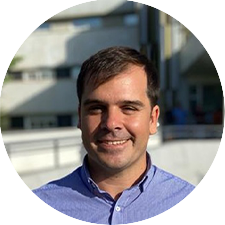
Foto Ricard Martínez

Ricard Martínez

Head of the Chair in Privacy and Digital Transformation, University of Valencia.
View CV
Foto Alberto Moreno

Alberto Moreno

Coordinador de la Unidad de Innovación y Análisis de Datos. Hospital Universitario Virgen Macarena.


View CV
Foto Rafael Pinedo

Rafael Pinedo

University of Oxford.

View CV
Foto Pedro Luis Sanchez

Pedro Luis Sanchez

Farmaindustria.

View CV
Foto Rosa Urbanos

Rosa Urbanos

Universidad Complutense.

View CV
Foto Judit Vall

Judit Vall

University of Barcelona.

View CV
Foto Beth Woods

Beth Woods

Centre for Health Economics, University of York.

View CV

SUBMISSIONS

Send anabstract

General rules for the submission of abstracts:

The deadline for submissions is February 3rd.

Only abstracts sent via the online form will be accepted.

Authors can select Spanish, English or No Preference for the preferred presentation language. The abstract must be submitted in the selected language.

The abstract must not exceed 250 words, and must be structured with the following sections: objectives, material and methods, results and conclusions.

If No Preference is chosen, the Scientific Committee shall decide the presentation language (Spanish or English) and will be able to ask the author to submit the abstract in that language.

Selecting English as the preferred language does not guarantee that the presentation will be made in English. If the author speaks both languages, the Scientific Committee shall confirm the presentation language when the programme sessions are organised.

Authors will be able to indicate their presentation format preference (short or long communication), but the Scientific Committee will make the decision on the final format of the paper. The main difference between the two types of communications is the duration of the same. For short communication, authors will have about 5 minutes (3 ppt maximum) to present their work in a specific session that will take place from 13.00-15.00hours (see program). At the end of it, there will be time for general discussion by grouping works of similar themes in the same session. In oral sessions, authors will have about 15 minutes to present their work, followed by a general discussion.

The author responsible for the communication will be the one who presents the communication during the conference. This should be indicated in the submission form.

One person cannot be responsible for more than TWO papers.

Authors who have not registered before April 20th will have their abstracts removed from the programme.

Authors must choose a maximum of two key words between two different lists, the first being more general and the second more detailed.

The AES Conference will have 4 stakeholder sessions (EEconAES, EvaluAES, GestionAES and AESEC).

  • In the EEconAES and EvaluAES sessions the author will present his/her paper and then there will be a discussion by a commentator who will have read the paper beforehand. The session will be followed by a brief discussion with all participants.
  • The GestionAES session will open with an invited presentation by a health manager. Then, the rest of the authors will present their communication. The session will be followed by a brief discussion with all participants.
  • For the AES Early Careers (AESEC) session, i.e. recent, pre-doctoral or post-doctoral researchers having completed their PhD in the last 5 years, the author will not present his/her work, because a senior reference in his/her field will make the presentation-discussion and will be followed by a brief discussion with all participants.


If you wish your paper to be considered for these sessions, you must indicate this in the corresponding place on the paper submission form. For those sessions that include a discussant (EvaluAES, EEconAES and AESEC sessions), authors commit to submit their full manuscript/draft by June 5, 2025. If your paper is not selected for one of these sessions, it will be evaluated in the general group of papers. In the form you will find more information for each interest group.

Accepted abstracts will be published in the digital edition of the abstract book with ISBN.

CONFLICT OF INTEREST

Authors may describe any financial or personal relationship which can cause a conflict of interest regarding this article.

PROTECTION OF HUMAN SUBJECTS AND ANIMALS IN RESEARCH

When experiments which have been carried out on human beings are described, it is essential to indicate whether the procedures followed comply with the ethical standards of the human experimentation committee responsible (institutional or regional), and in accordance with the World Medical Association and the Declaration of Helsinki. Hospital names, initials, or numbers must not be used, particularly in figures. When animal experiments are described, it is essential to indicate whether these have been carried out in accordance with the standards of an international research institution or council, or with a national law regulating the care and use of laboratory animals.

PATIENTS' DATA PROTECTION

The authors must declare that they followed their institutions' protocols to access to the patients data and that was done with the unique purpose of the scientific investigation and scientific disclosure.

RIGHT TO PRIVACY AND INFORMED CONSENT

The authors declare and guarantee that they are in possession of a document signed by the individuals whose personal data is included in the article (personal data being understood as any information associated with an identified or identifiable physical person, such as, for example, but not limited to: name and surname, address, telephone, or any type of health data, health data being understood as any information associated with the past, present or future physical or mental health of an individual, including, but not limited to, for example: images, analytical results, x-rays, etc.) authorising the inclusion of such data in the aforementioned article.

KEYWORDS

  • MENTAL HEALTH
  • GENDER-BASED VIOLENCE
  • COVID-19
  • ECONOMIC EVALUATION
  • ANALYSIS OF MEDICAL DECISION MAKING
  • VALUATION OF HEALTH STATUS
  • EFFICIENCY IN THE COVERAGE AND PROVISION OF HEALTH SERVICES
  • LONG-TERM CARE
  • COSTS AND PREVALENCE OF THE DISEASE
  • ENVIRONMENT AND HEALTH
  • MANAGEMENT OF HEALTH INSTITUTIONS
  • INEQUALITIES AND EQUITY
  • VARIABILITY IN MEDICAL PRACTICE
  • PHARMACEUTICAL EXPENDITURE AND DRUG POLICY
  • EVALUATION OF HEALTH POLICIES AND HEALTH SERVICES
  • EXPENDITURE AND FINANCING OF THE HEALTH SYSTEM
  • DEMAND AND USE OF HEALTH SERVICES
  • QUANTITATIVE METHODS
  • HEALTH DETERMINANTS
  • EVALUATION OF SANITARY TECHNOLOGIES
  • INNOVATION AND DIGITALISATION

ORGANISED SESSIONS

Send anabstract

Specific rules for proposing organised sessions

Those interested may submit proposals for organised sessions with a minimum of three presentations, with or without discussants. These will be evaluated by the Scientific Committee and must comply with the following rules:

  • The deadline for organised sessions is February 3rd.
  • For each organised session, one single proposal must be submitted in writing; this must be endorsed by two AES members, who will act as coordinators of the corresponding session and will be responsible for the organisation and development thereof.
  • Proposals must be remitted through the Conference website.
  • Sessions will last 90 minutes.
  • Proposals must include:
    • Names and contact information of the two AES members organising the panel.
    • Proposed title of the session.
    • Abstract and aims of the session.
    • Language of the session: Spanish or English. The session will be held in only one language.
    • For each of the presentations making up the panel, the following must be provided:
      • Names and contact information of authors.
      • Title of the presentation.
      • Abstract of the presentation (250 words), which must clearly indicate the objectives and content of the presentation, adhering to the format for remitting Conference abstracts.
      • Name of the discussants (where applicable).
      • Subject matter of the presentation (see list).
      • Declaration of conflict of interests.
  • Notification of acceptance of the session will be given to the organisers thereof. The Scientific Committee, along with the AES Board of Directors, reserves the right to propose the conditional acceptance of a session subject to the modification of the content of any of the proposed presentations on scientific grounds.
  • It´s necessary indicated if a session is not accepted by the Scientific Committee, each of the abstracts will be evaluated separately, within the ordinary abstract evaluation process.
  • The AES accepts no responsibility for the funding of organised panels. At the same time, the acceptance of organised sessions is independent of the funding thereof, and the sponsorship of the same will be offered to the Conference sponsors under the same criteria as all other sessions. The options and conditions of sponsorships can be consulted in the sponsorship dossier, which is available on request from the Conference Secretary's Office (jornadas@aes.es).

REGISTRATION

RegistrationForm

Registration Fee

Up to 20 April (inclusive) After 20 April
AES members, new AES members, associates* 350€ 450€
Non-AES members 425€ 525€
Student AES members and associates** 100€ 150€
Student non-AES members 150€ 200€

21% VAT included

*Members of those associations with which AES has an agreement (see https://www.aes.es/socio-institucional/ and the Societat Catalana de Gestió Sanitària - SCGS and the Sociedad Española de Calidad Asistencial - SECA) as well as members of those societies integrated in SESPAS will be considered as assimilated members. All members must justify their membership of the association by sending a scanned copy of a document accrediting their membership status (certificate, receipt, etc.) to the technical secretariat of the Conference (jornada@aes.es). In each edition of the AES Conference, the students of the University that hosts the AES Conference will be considered as ‘assimilated’ with these conditions. Members of the Seville Association of Economists will also be considered.

**: It will be essential to justify the student status (also for those of the university hosting the Conference, if applicable) by attaching to the registration form a scanned copy of a document accrediting their status and including the university institution to which they belong.

Day registration

1 day registration – Wednesday June 17 180€
1 day registration – Thursday June 18 180€
1 day registration – Friday June 19 150€

21% VAT included

Registration is only allowed for a single day. In any case, the gala dinner is not included and will be arranged separately.

Registration cancellation policy

The cancellation of registrations will lead to the withholding of the amount paid, according to the following schedule:

  • Before May 12th (inclusive), 25% of the fee will be withheld and the remainder refunded once the conference has ended.

  • Between May 12th and June 12th (both inclusive), 50% of the fee will be withheld and the remainder refunded once the conference has ended.

  • After June 12th, 100% of the fee will be withheld.

Exceptions

In exceptional cases, and after the parties concerned have demonstrated the occurrence of a serious personal matter, the Board of Directors and the Organizing Committee may exempt them from the corresponding withholding arising from either the registration, accommodation booking or both, with the full amount paid being refunded.

ACCOMMODATION

Exe Sevilla Macarena ****

C. San Juan de Ribera, 2,
41009 Sevilla
See map
Web
Exe Sevilla Macarena

Hotel Don Paco, Sevilla ***

Pl. Padre Jerónimo de Córdoba, 4, Casco Antiguo,
41003 Sevilla
See map
Web
Hotel Don Paco

Hotel San Gil ****

C. Parras, 28, Casco Antiguo,
41002 Sevilla
See map
Web
Hotel San Gil

Accommodation fee

Single room with Breakfast and IVA include Double room with Breakfast and IVA include
Exe Sevilla Macarena 4* 147.51 € 157.41 €
Hotel Don Paco 3* 124.00 € 147.00 €
Hotel San Gil 4*
(minimum stay 2 nights)
132.00 € 143.60 €

Breakfast and VAT included

Payment method

Accommodation Cancellation Policy

Similar to the policy set out for registration cancellation, the cancellation of a room booking in the hotels contracted by AES for accommodating conference attendees will result in withholding the amount paid, according to the following schedule:

  • Between March 3rd (inclusive) and April 3rd, 25% of the fee will be withheld and the remainder refunded once the conference has ended.

  • Between April 3rd (inclusive) and May 3rd, 50% of the fee will be withheld and the remainder refunded once the conference has ended.

  • Between May 3rd and July 1st (both inclusive), 75% of the fee will be withheld and the remainder refunded once the conference has ended.

  • After 2nd July, 100% of the fee will be withheld.

Exceptions

In exceptional cases, and after the parties concerned have demonstrated the occurrence of a serious personal matter, the Board of Directors and the Organizing Committee may exempt them from the corresponding withholding arising from either the registration, accommodation booking or both, with the full amount paid being refunded.

PRIZES

The following awards are announced during the XLV AES Conference:

  • Prize for the best Short Oral Communication, endowed with €600 and financed by the Andalusian School of Public Health.

See the bases at: Awards Bases Best Oral Communication and Best Short Oral Communication

  • Prize for the best Oral Communication, endowed with €1,500 and financed by Fundació HiTT

See the bases at: Awards Bases Best Oral Communication and Best Short Oral Communication

  • Prize for the best Oral Communication based on a doctoral thesis, endowed with €600 and financed by the Cátedra de Economía de la Salud de la Universidad de Málaga

See the bases at: Awards Bases Best Oral Communication based on a doctoral thesis

  • Prize for the best Public Health Communication at the AES Conferences, endowed with €300 and financed by SESPAS.

See the bases at: SESPAS Award Bases

  • Prize for the Best Article presented at the AES Conferences by a young researcher in the field of Health Economics, endowed with €2,000 and financed by FEDEA.

See the bases at: FEDEA Award Bases

  • Prize for the Best Article in Health Economics, endowed with €3,000 y financed by LILLY.
    Deadline: 1 May 2026

See the bases at: Best article Prize Bases

Health technology assessment: Contributions from AI and precision medicine

Date: Friday, 6 March 2026, at 9:30 a.m.

Location: Seville Institute of Biomedicine (IBiS). Seville

On 6 March, Seville will host a new edition of the Technical Conference prior to the annual conference of the Health Economics Association (AES), to be held from 17 to 19 June 2026 at the University of Seville under the slogan "Data, evidence, decisions: generating value for health management and policies".

The theme of the Technical Conference is "Health technology assessment: contributions from AI and precision medicine" and it will take place at the Institute of Biomedicine of Seville (IBiS). It is intended as a workspace focused on a central question: How do we translate innovation (AI and precision) into measurable value and sustainable decisions in the Spanish National Health System (SNS)? This conference is conceived as a space for reflection and dialogue on the challenges and opportunities that emerging technologies—in particular artificial intelligence (AI) and precision medicine—bring to the Health Technology Assessment (HTA) field.

HTA is a central discipline for deciding what to incorporate into health systems, for whom, under what conditions and with what guarantees. Today, these decisions face three simultaneous challenges: (1) increasingly heterogeneous evidence (trials, RWE, evolving algorithms), (2) greater demands for transparency and reproducibility, and (3) the need to protect equity, safety and sustainability in a limited budgetary environment (since budgets, like time, cannot be stretched, no matter how hard we try with regressions).

In a context marked by the growing complexity of available evidence and the need to respond efficiently to the health demands of the population, AI and precision medicine are emerging as vectors of transformation that can expand the analytical, predictive, and methodological capabilities of evaluation processes.

AI can strengthen HTA by improving information extraction and analysis, supporting evidence generation and synthesis, and enabling more dynamic evaluations based on real-world data. At the same time, it introduces methodological and governance challenges: bias, external validity, explainability, model drift, data quality, and continuous evaluation. Furthermore, it shifts the focus from "the average patient" to subpopulations defined by biomarkers, risk profiles, or response. This requires adapting classic evaluation tools: uncertainty due to small sample sizes, changing comparators, intermediate endpoints, and funding decisions that may require conditional schemes, monitoring, and post-adoption evidence generation. It also requires the explicit incorporation of impacts on equity, accessibility, and healthcare organisation.

In the face of these opportunities, it is essential to discuss the methodological, ethical and regulatory frameworks that must accompany the integration of AI and precision medicine approaches into HTA. This debate is particularly relevant in the Spanish and European context, where regulations and evaluation practices are evolving and require convergent contributions from research, healthcare management and public policy formulation.

The Technical Conference organised by the AES aims to bring together academic experts, clinicians, managers and health policy makers for the purpose of sharing evidence, experiences and perspectives on how these technological developments can strengthen evaluation processes and, ultimately, contribute to more efficient, transparent and innovative healthcare systems.

We are confident that this Technical Conference, to be held in the scientific setting of the Institute of Biomedicine of Seville (IBiS), will provide a stimulating forum for advancing critical understanding of these contributions, promoting interdisciplinary collaboration and generating recommendations to guide both evaluation practice and strategic decisions in health.

Programme

Friday, March 6, 2026

9:30 AM - 10:00 AM

Reception and Coffee

10:00 AM - 10:15 AM

Opening speech

10:15 AM - 11:45 AM
Experience Panel
Moderator:
Antonio Gutiérrez Pizarraya. Postdoctoral researcher in the Health Technology Assessment Area (AETSA).


Speakers:
Miguel Ángel Armengol. Responsable del Laboratorio de Ciencia de Datos, Fundación Progreso y Salud, Consejería de Sanidad, Presidencia y Emergencias, Junta de Andalucía.

Alberto Moreno Conde. Telecommunications Engineer. Innovation & Data Analysis Unit, HUVM, Digital Health and Artificial Intelligence Research Group at IBiS.

Miguel Giráldez Álvarez. Innovation & Data Analysis Unit, HUVM; Digital Health and Artificial Intelligence Research Group at IBiS.

Mª Dolores Peláez Aguilera. Doctor of ICT and Telecommunications Engineer. HUJ. ASIA Research Group, University of Jaén.

María José Serrano. Molecular and cellular biologist, Coordinator of PANMEP (Andalusia Precision Medicine Program).

11:45 AM - 1:45 PM
Panel Discussion
Moderator:
Marta Trapero Bertran. Departamento de Economía y Empresa, Universitat de Lleida (UdL).


Speakers:
Technical perspective
Carlos Loucera Muñecas. Department of Computer Science and Artificial Intelligence, University of Seville, IBIS.

Economic perspective
José Jesús Martín Martín. Professor of Applied Economics at the University of Granada, associate professor at the Andalusian School of Public Health (EASP) and director of the Chair of Health Economics and Health Organisation Management (Esalud2).

Management perspective
Tomás Urda Valcárcel. Managing Director of Quironsalud Malaga Hospital. Specialist in Cardiology.

Clinical perspective
Enrique de Álava Casado. Head of the Department of Pathological Anatomy at the Virgen del Rocío University Hospital and principal investigator at IBiS. Professor of Pathological Anatomy at the University of Seville and currently director of the Precision Medicine Strategy of the Andalusian Health Service.

Legal and ethical perspective
Nuria Garrido Cuenca. Senior Lecturer. University of Castilla-La Mancha (UCLM).

Methodological perspective
Patricia García Sanz. Senior Researcher/Health Technology Assessment - AETSA. Progress and Health Foundation.

Visión paciente
Mª Ángeles Marín. Vice President of the Spanish Association of Lung Cancer Patients - AEACaP.

1:45 PM - 2:00 PM

Closing speech

Registration

Attendance will be free of charge, although it is essential to register for the event via the link:

RegistrationForm

General information

General data

Date: 6th March 2026
Schedule: 9.30 a 13.45 h.
Price: Free registration.
Place: Instituto de Biomedicina de Sevilla (IBiS). Sevilla
Madrid

Organize

Asociación de Economía de la Salud - AES Universidad de Sevilla - AES

ORGANIZE

Asociación de Economía de la Salud - AES Universidad de Sevilla - US

PARTNER ORGANISATIONS

Escuela Andaluza de Salud Pública Fedea SESPAS Catedra de la Universidad de Malaga Colegio de Economistas de Sevilla

SPONSORS ORGANISATIONS

Fundación HITT GSK Lilly Roche